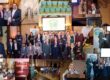
Nikolaus Brada, owner and managing director of the Viennese elevator company NIBRA, initiated the series of talks to bring residential construction, the real estate industry, law, politics and long-term building practice into conversation with each other. Together with Bauer, he formulated the goal in the invitation: “More living space is created where different interests are not thought of against each other, but together. This is exactly what we want to create a table for.” The discussion was moderated by VÖPE Managing Director Alexander Pawkowicz.
IMMOunited: Recovery continues more subdued
Bauer provided the market impetus on the basis of current evaluations by IMMOunited. According to the report, real estate transactions in Austria in the first half of 2026 were above the previous year’s level. In the third quarter, the development continued with somewhat slower momentum and lost some momentum. At the same time, IMMOunited is registering a growing interest in proactive customer enquiries from financially strong market participants, including family offices, foundations and funds. Bauer sees the market continuing to be in a correction phase, but at the same time new investment opportunities are opening up.
Housing needs: shortage or wrong supply?
Karina Schunker, Managing Director of EHL Wohnen GmbH, reported on bottlenecks in the Viennese rental housing market. Declining completions and the growing number of single-person households increased the pressure on the search for housing. For many interested parties, it is becoming more difficult to find suitable rental apartments.
Clemens Berger, housing law expert of the Vienna Chamber of Labour, on the other hand, questioned a general quantitative housing shortage. He referred to what he saw as a temporarily too high housing production in Austria and emphasised that apartments must not only be available, but also affordable in the long term. He pleaded for stronger non-profit housing. The contributions referred to different levels: the Viennese rental market and the Austria-wide housing development.
Thinking more about renovation and building operation
Dr. Andreas Köttl, CEO of nxt real estate and President of VÖPE, called for faster zoning and approval procedures. Long project durations make it difficult to react in a timely manner to changing needs. Köttl also pleaded for more frequent renovation and conversion of existing buildings instead of exclusively building new ones. He also emphasized the value of resources that have already been built and the existing building fabric.
Lawyer Benedikt Stockert, partner at FSM Rechtsanwälte, referred to neighbours’ objections as well as hurdles with consent and toleration obligations. Heidi Sequenz, Viennese municipal councillor and member of the state parliament, emphasised densification and subsidised housing and brought up a vacancy tax.
The costs of decarbonisation were also controversially discussed. Köttl underlined the long-term benefits of sustainable renovations. Berger warned against passing on the costs unilaterally to tenants and referred to necessary renovation concepts and sufficient reserves in residential property. Stockert called for practicable legal frameworks.
The evening clarified the hosts’ approach: Housing creation, economic efficiency and long-term operation belong together. As an elevator company, NIBRA brings in particular the perspective of technical usability over the entire building life cycle. A common position on the number of apartments required or the distribution of renovation costs was not formulated on the podium.
CSR Dialogue Forum is cooperation partner of this event series.